Author's Preface: The Epigraphic Legacy of Phaya Mangrai Luang
"Phaya Mangrai Luang" (พระญามังรายหลวง) is the royal title explicitly inscribed on the historic Wat Phra Yuen Stone Inscription in Lamphun Province (1370 C.E. / 1913 B.E.). Carved during the reign of Phaya Kue Na, the 6th monarch of the Mangrai Dynasty, this epigraph is the earliest surviving stone record mentioning the royal name of the dynasty's founder, created a mere 59 years following King Mangrai's reign. The honorific "Luang" (หลวง) signifies sovereign majesty and imperial greatness, equivalent to the contemporary appellation "The Great" (มหาราช).
King Mangrai the Great is an epochal historical figure whose achievements are extensively recorded in regional epigraphy and northern palm-leaf chronicles. His most defining statecraft includes the strategic unification of dispersed northern Tai principalities, the conquest of Hariphunchai (an affluent Mon Buddhist cultural and economic powerhouse), the strategic alliance with King Ramkhamhaeng of Sukhothai and King Ngam Mueang of Phayao, and the founding of Chiang Rai (1262 C.E.), Wiang Kum Kam, and Chiang Mai (1296 C.E.). These actions consolidated the geopolitical foundation that evolved into the flourishing Lanna Kingdom.
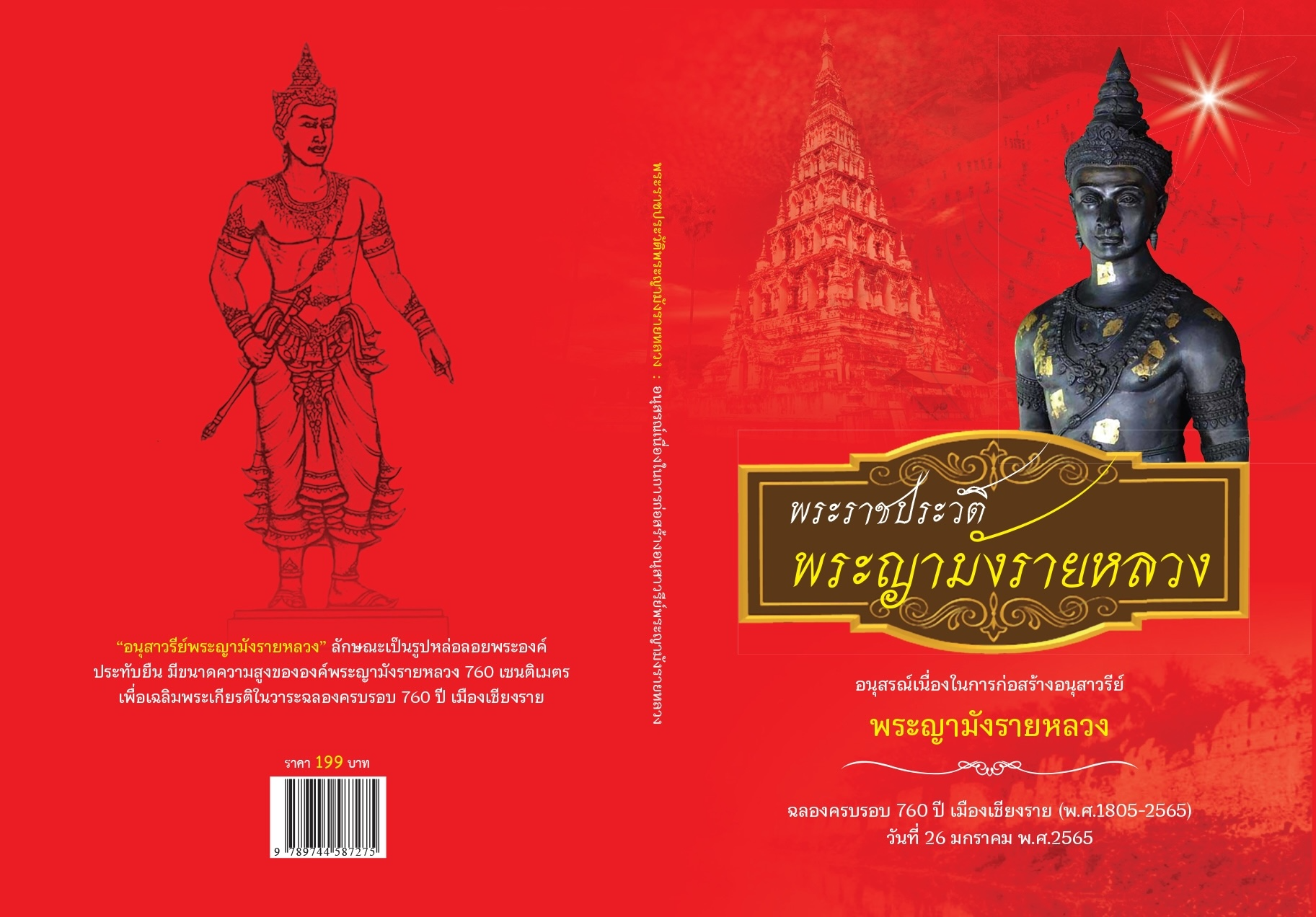
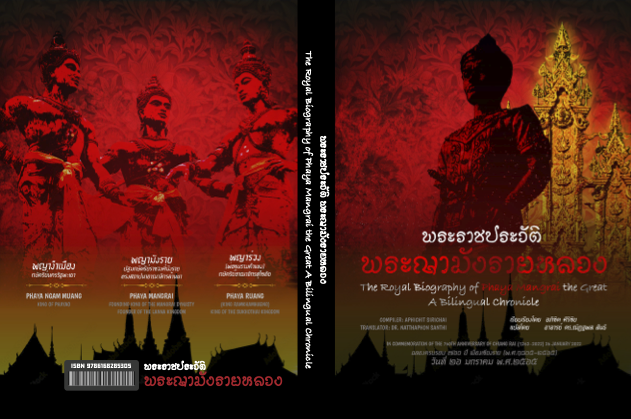
This monograph was compiled to commemorate royal grace and celebrate the 760th Anniversary of Chiang Rai City (1805–2565 B.E. / 1262–2022 C.E.), serving as a permanent academic memorial accompanying the construction of the Phaya Mangrai Luang Monument by the Sai Khao Subdistrict Administrative Organization, Phan District, Chiang Rai Province.